
Table Of Contents
- Why a Missing Tooth Deserves Attention
- The Main Treatment Options
- What a Dental Exam Checks
- Questions to Ask Before Treatment
- Comparing Time, Cost, and Care
- Daily Care and Long-Term Maintenance
- When to Seek a Second Opinion
- A Final Checklist
Whether the gap is visible when you smile or sits farther back where it affects chewing, replacing one missing tooth deserves thoughtful planning. Orlando residents often have busy schedules filled with work, school, travel, and family commitments, so it is understandable to want a solution that fits both daily life and long-term oral health.
People researching a single tooth implant Orlando FL, may find that an implant is one possible answer, but it is not automatically the right answer for every mouth. The location of the missing tooth, condition of the gums and bone, bite forces, nearby teeth, health history, budget, and personal preferences all matter.
Why a Missing Tooth Deserves Attention
A missing tooth can affect more than appearance. Depending on its position, it may change how food is chewed, influence speech, or alter where teeth meet when biting. Teeth beside or opposite the space may shift or move into the gap over time. After a tooth is lost, the bone in that area can also change, which may affect future replacement planning.
That does not mean every gap requires the same treatment or the same timeline. A missing back tooth and a missing front tooth can create different concerns. An in-person evaluation is the best way to determine whether monitoring, a temporary solution, or a permanent replacement is appropriate.
The Main Treatment Options
There are several common ways to replace a single tooth. Each has benefits, practical limits, and different daily-care requirements.
Implant-Supported Replacement
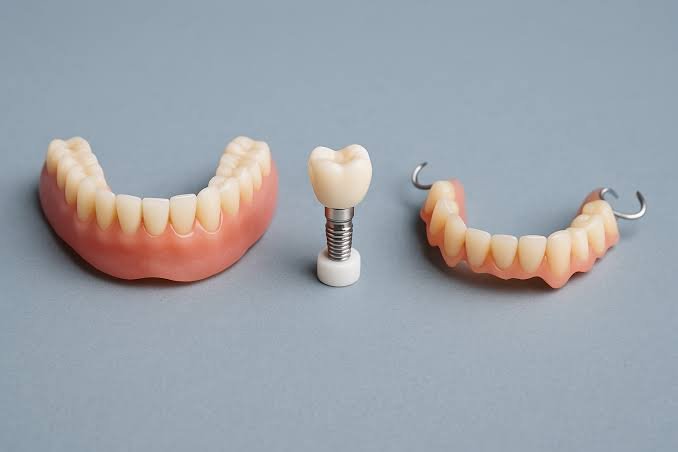
A dental implant is a post surgically placed in the jaw to support a replacement tooth, often a custom crown for a single missing tooth. Treatment can involve planning, implant placement, healing, and placement of the final crown. The process may take several visits, and some cases require more healing time than others. The American Dental Association explains that implants are surgically placed in the jaw and can support replacement teeth.
Photorealistic, candid, documentary-style photo of an adult patient having a relaxed conversation with a dentist in a naturally lit dental consultation room, with a treatment plan and a dental model on the counter, genuine in-the-moment expressions, realistic clinical environment, soft, imperfect lighting, no posed smiles.
An implant-supported crown stands independently rather than relying on adjacent teeth for support. However, surgery, gum health, bone condition, healing ability, bite forces, and ongoing maintenance should all be part of the discussion.
Traditional Dental Bridge
A traditional bridge replaces the missing tooth by connecting it to crowns on nearby supporting teeth. It may be considered when the teeth next to the gap already need crowns or are strong enough to support the design. Cleaning beneath the replacement tooth is an important daily task, often using tools recommended by a dental professional.
Removable Partial Denture
A removable partial denture can replace one or more teeth and is taken out for cleaning. It can be a non-surgical option and may be useful in situations where a fixed restoration is not suitable. Some people need adjustments as they adapt to changes in fit, movement, or comfort.
Temporary or Conservative Choices
A temporary replacement may help maintain appearance or function while an extraction site heals, treatment is planned, or other oral health concerns are addressed. Temporary does not necessarily mean poor quality, but it may have different limits than a long-term restoration.
- Implant-supported crown: Fixed replacement supported by an implant, with surgery and healing to consider.
- Traditional bridge: Fixed replacement supported by nearby teeth, with daily cleaning under the artificial tooth.
- Removable partial denture: A removable replacement that may avoid surgery but can require adjustments.
- Temporary replacement: Short-term option used during healing or decision-making.
What a Dental Exam Checks
A sound treatment plan considers the whole mouth, not just the open space. The exam may include an assessment of gum health, available bone, nearby teeth, tooth position, existing fillings or crowns, and the way the upper and lower teeth meet. X-rays or other imaging may be recommended when more information is needed.
Medical history also matters. Tobacco use, diabetes, medications, and conditions that affect healing can influence planning. Clenching or grinding may affect the type of restoration and the need for protective measures.
Questions to Ask Before Treatment
- What options are reasonable for this specific gap?
- What are the advantages and limitations of each option?
- Will nearby teeth need to be changed?
- Do my gums or bone need treatment first?
- How long will the complete process take?
- Will I have a temporary tooth while treatment is underway?
- How should I clean this restoration every day?
- What does the written estimate include, and what could cost extra?
- What symptoms should prompt a follow-up visit?
Comparing Time, Cost, and Care
The lowest initial fee is not always the lowest overall cost. Compare the complete plan, including imaging, extraction if needed, temporary teeth, surgery, the final restoration, adjustments, and follow-up visits. Insurance deductibles, benefit limits, exclusions, and waiting periods may also affect out-of-pocket costs.
Consider the practical side as well. One approach may require surgery and healing but leave nearby teeth unchanged. Another may avoid surgery but require changes to neighboring teeth or more specialized daily cleaning. The best fit depends on the individual’s mouth, not price alone.
Daily Care and Long-Term Maintenance
A replacement tooth still needs daily care. Brush as instructed, clean between natural teeth and around the restoration, and attend routine dental exams and professional cleanings. Floss, interdental brushes, or other cleaning aids may be recommended based on the restoration design.
Healthy gums are especially important because gum disease affects tissues that support teeth. The National Institute of Dental and Craniofacial Research notes that daily brushing, regular cleaning between teeth, and routine dental visits help protect gum health. Contact a dental office if there is pain, swelling, bleeding, looseness, a persistent bad taste, or a change in the bite.
When to Seek a Second Opinion
A second opinion can be useful when the recommended treatment is unclear, only one option is presented without explanation, the estimate is difficult to understand, or the decision feels rushed. It may also help with complex gum, bone, medical, or bite concerns. Seeking another professional perspective is a reasonable way to compare plans and make a more confident decision.
A Final Checklist
- Identify your main goal: chewing, appearance, comfort, or all three.
- Ask how your gums, bone, bite, and nearby teeth affect the options.
- Request a written treatment plan and a complete estimate.
- Ask about healing time, temporary teeth, and follow-up needs.
- Understand how the chosen restoration should be cleaned.
- Take time to compare options before committing to care.
Replacing one missing tooth is a personal health decision, not a one-size-fits-all purchase. For Orlando patients, a careful conversation with a dental professional can help balance function, appearance, comfort, timing, cost, and long-term maintenance.
 SHA Guest Posts
  Sky Bloom IT