
Most of us in marketing live inside screens. We write the email, schedule the post, tweak the ad and check the dashboard. It’s efficient, and it works. But there’s a side effect: every brand is doing the same thing, in the same place, at the same time. Your best customer’s inbox is probably full of messages that look a lot like yours.
That’s why a small offline gesture can do something a fifth follow-up email can’t. A card, a gift or a handwritten note arrives in a different space, and it gets noticed. This article looks at where a physical thank-you fits into a digital plan, how to choose it, and, most importantly, how to measure whether it’s worth the effort.
Why Physical Gestures Cut Through the Noise
Digital messages are quick to send and quick to ignore. A physical item takes a little more effort, and people can feel that effort. It tells the customer that someone took the time, which is something automation can’t fake easily.
There’s also a simple practical point. A box on a desk is seen by more than one person. A shared gift can be noticed by a client’s team, their manager and their assistant, all of whom may influence a future buying decision.
This doesn’t mean offline replaces digital. The best results usually come when the two work together: the gift starts the conversation, and your email, call or landing page continues it.
Where an Offline Touch Fits in the Customer Journey
You don’t need a gift at every step. A few moments are worth planning for:
- After a first purchase or project. A short thank-you shows the relationship matters beyond the first sale.
- Before a renewal. A warm gesture a few weeks ahead can make the renewal conversation easier.
- After a referral. Someone who sends you new business has done you a favour. Recognise it properly.
- At a quiet moment. A surprise “thinking of you” in the middle of the year often lands better than another holiday gift in December.
Mark these moments in your CRM or project tool, so they happen on time instead of being remembered when it’s too late.
Choosing a Gift That Matches Your Brand
The gift is part of your brand experience. A rushed, off-brand item can undo the good work of a great campaign. Ask yourself what feeling you want the client to have when they open it: appreciated, celebrated or simply remembered.
Simple, shareable items tend to work best in a business setting. If you need to send gifts to many clients, you can browse corporate gift baskets for clients and pick one style to use across a whole segment. That keeps the experience consistent, and it saves you from sourcing dozens of one-off items.
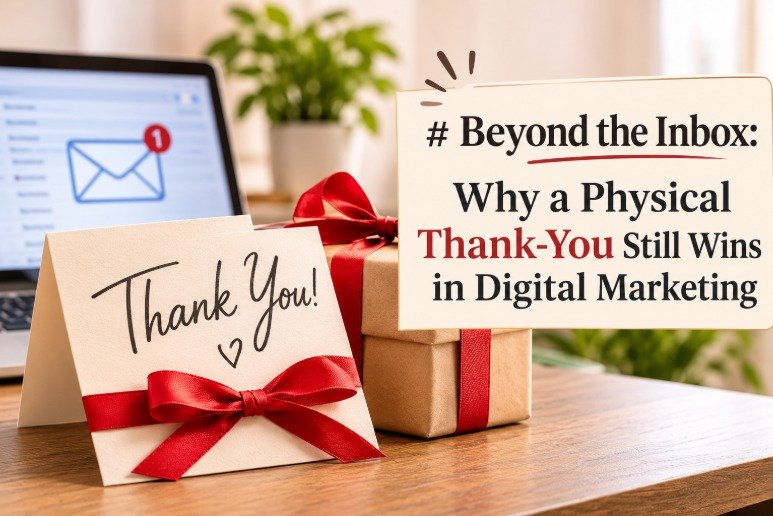
[IMAGE HERE: Insert the featured image “offline-thank-you-featured.png” at this point. Alt text: Handwritten thank-you card and gift box beside a laptop showing marketing analytics]
Whatever you choose, a short handwritten note matters more than the item itself. Mention a real detail, such as a project you finished together or a goal they reached.
Treat Your Top Accounts Differently
Not every client is worth the same investment, and that’s fine. Your top accounts, or the ones with the most growth potential, can justify something a little more special for a major milestone like a big contract renewal or a landmark anniversary.
For moments like that, a celebratory bottle is a classic option, as long as it suits the client. You can explore luxury champagne gifts for these occasions. Keep the packaging simple, add a sincere message, and don’t expect the gift to do the selling for you.
Clients in Different Cities? Plan the Delivery
Most marketing teams work with customers in several places. That’s an advantage, but it also means you have to think about delivery windows, signatures and timing. A gift that arrives while the client is travelling or after a campaign has ended loses its effect.
If you have important accounts in a large city, check the delivery details early. For example, if a client is based in New York, you can check delivery options in New York before you build your campaign calendar. Alcohol deliveries generally require an adult to receive them, so confirm who will be there.
How to Measure Whether It Works
This is the part many teams skip, and it’s where a marketing mindset helps. A gift isn’t a mystery. You can track it, at least in a simple way.
- Add a trackable element. A short URL, QR code or reply-to email on the card lets you see who responds.
- Tag recipients in your CRM. Note the gift, the date and the client segment.
- Compare over time. After 60 to 90 days, look at repeat orders, replies and referrals from recipients, and compare them with similar clients who didn’t receive a gift.
- Keep your claims modest. Small samples can mislead. Treat early results as signals, not proof.
- Record the qualitative feedback. A warm reply or a phone call is also a result, even if it doesn’t show up in a spreadsheet.
Keep It Ethical and Respectful
A few simple rules protect both your client and your brand:
- Check gift policies. Many companies limit the value or type of gifts their staff may accept.
- Respect privacy. Only send gifts to addresses the client has given you for business use.
- Offer alternatives. Some people don’t drink alcohol, so have a non-alcoholic option ready.
- Don’t attach strings. A thank-you shouldn’t read like a request.
Frequently Asked Questions
Is a physical gift worth it in a digital campaign? It can be, especially for high-value clients. It’s best used for key moments, and measured in a simple way.
How do I track results from an offline gift? Use a trackable link or QR code, tag recipients in your CRM and compare their behaviour with similar clients over a few months.
How much should I spend per client? Set tiers based on client value and keep the spending consistent. A sincere note often matters more than a bigger budget.
What if a client can’t accept gifts? A personal handwritten card or a charitable donation in their name can be a good alternative.
Final Thoughts
Digital marketing gives us speed, data and reach. An offline thank-you gives us something different: attention. Used with care, at the right moments and with a simple way to measure it, it can make a campaign feel more human and help turn happy customers into loyal ones.
If you’d like to plan your next round of customer gifts, you can discover more gift ideas for your customers and find an option that fits your brand and budget.
 EchoLinkers