
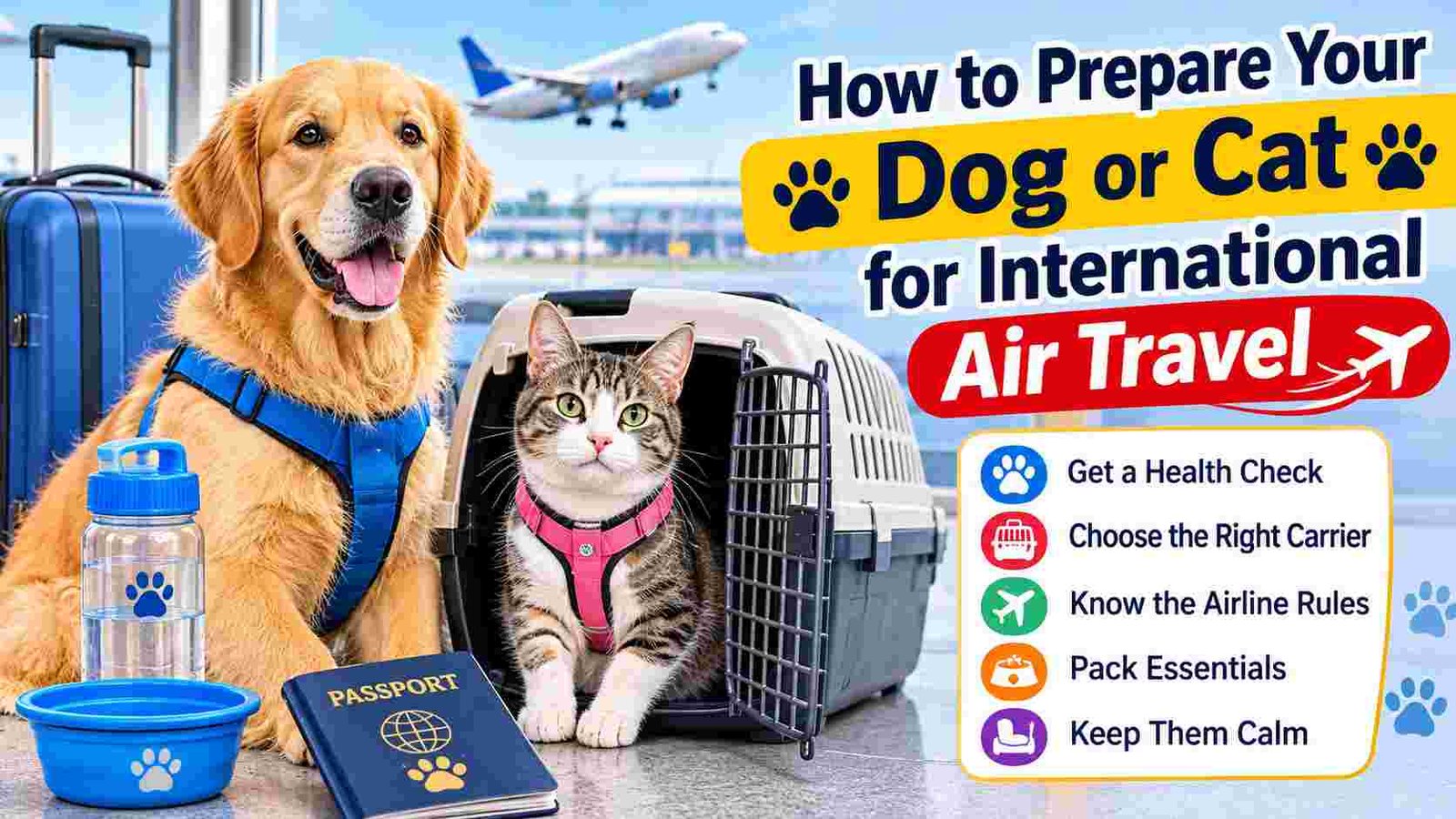
Travelling internationally with your dog or cat requires more preparation than simply booking a flight. From veterinary examinations and airline policies to travel crates and destination-specific documentation, every detail matters when planning a safe journey for your pet. International pet air travel involves several requirements that vary depending on the departure country, destination, airline and type of animal. Starting early can help prevent documentation issues, travel delays and unnecessary stress for your furry companion. Whether you are relocating permanently or travelling overseas with your pet, this guide explains how to prepare your dog or cat for international air travel.
1. Research Your Destination’s Pet Travel Requirements
Before booking your flight, research the animal import regulations of your destination country. Different countries have specific requirements for vaccinations, microchips, health certificates, parasite treatments and import permits. Some destinations may also require rabies antibody titre tests or quarantine periods.
Always check the latest regulations through the destination country’s official government or animal health authority. Requirements can change, so relying on outdated information may cause problems during travel.
2. Schedule a Veterinary Health Check
A veterinary examination is essential before international pet transportation. Your veterinarian can assess whether your dog or cat is healthy enough to fly and identify any medical concerns that need attention.
During the appointment, discuss:
- Your pet’s overall health and fitness for air travel.
- Required vaccinations and booster schedules.
- Microchip identification.
- Parasite prevention and treatments.
- Existing medical conditions.
- Additional tests or destination-specific health certificates.
Schedule the appointment well in advance because some veterinary documents must be issued within a specific period before departure.
3. Complete Microchipping and Vaccination Requirements
Many countries require pets to have an approved identification microchip before entering their territory. The microchip number must match the details recorded on vaccination certificates and other travel documents.
Rabies vaccination is particularly important for international travel. Depending on the destination, authorities may require vaccination after microchip implantation, a waiting period or a rabies antibody titre test.
Other vaccinations may also be recommended or required depending on your pet’s health and destination.
Keep copies of vaccination records and check that all identification details are consistent across the paperwork.
4. Choose an Airline-Approved Travel Crate
Selecting the right travel crate is one of the most important steps when preparing your pet for an international flight.
The crate should comply with the airline’s requirements and applicable animal transport standards. It must provide enough space for your pet to stand naturally, turn around and lie down comfortably.
Consider these factors:
- Correct size: Measure your pet before purchasing a crate.
- Durable construction: Choose a strong crate with secure closures.
- Ventilation: Ensure adequate airflow.
- Comfortable flooring: Use suitable absorbent, non-slip material.
- Water access: Follow airline requirements for appropriate water containers.
Introduce the crate several weeks before departure. Allow your pet to explore it gradually and reward calm behaviour. Familiarity with the crate can make the travel experience more comfortable.
5. Help Your Pet Become Comfortable with Travel
Air travel can be unfamiliar for animals, especially those that have never spent extended periods inside a travel crate.
Begin preparation gradually instead of introducing everything on departure day.
You can help your pet by:
- Practising short periods inside the crate.
- Gradually increasing crate time.
- Maintaining familiar feeding and exercise routines.
- Introducing positive crate-training activities.
- Rewarding calm behaviour with treats and praise.
If your pet experiences significant anxiety, consult your veterinarian for advice. Avoid giving sedatives or calming medication unless specifically recommended by a veterinarian and accepted under the airline’s policies.
6. Understand Airline Pet Travel Policies
Not every airline offers the same pet transportation arrangements. Some allow eligible small pets to travel in the cabin, while others offer accompanied baggage or manifested cargo options.
Before booking, confirm:
- Whether the airline accepts your pet’s breed and species.
- Available cabin or cargo arrangements.
- Crate dimensions and weight restrictions.
- Minimum age requirements.
- Seasonal temperature restrictions.
- Transit and connecting-flight policies.
- Required booking procedures.
Certain breeds, particularly short-nosed dogs and cats, may face additional restrictions because of potential breathing difficulties.
Never assume that an airline’s general pet policy applies to every route. Confirm the specific requirements for your journey.
7. Prepare All Essential Travel Documents
Incomplete paperwork can delay your pet’s journey or prevent entry into the destination country.
Depending on the route, your pet may require:
- Microchip identification records.
- Valid vaccination certificates.
- An official veterinary health certificate.
- An import permit, where applicable.
- Rabies antibody test results, where required.
- Parasite treatment records, where required.
- Government veterinary endorsements.
- Airline transport confirmation.
Some documents must be completed or endorsed within specific timeframes. Keep physical and digital copies of important records and verify that all details match.
8. Plan Feeding and Hydration Before Departure
A suitable feeding and hydration routine can help make international pet air travel more comfortable.
Avoid giving your pet an unusually large meal immediately before departure. Follow your veterinarian’s advice and the airline’s feeding instructions.
Make sure your pet has access to water according to the airline’s requirements. Avoid introducing unfamiliar foods shortly before travelling, as sudden dietary changes can cause digestive problems.
Allow your dog enough time for exercise and bathroom breaks before airport check-in.
9. Consider Professional Pet Transportation Support
Organising an international journey can become complicated when multiple countries, airlines, veterinary procedures and documentation requirements are involved.
Professional pet transportation services can help coordinate important aspects of the journey, including route planning, airline arrangements, travel crate requirements and destination-specific documentation.
For families relocating internationally, experienced assistance can make the process more organised and reduce the risk of overlooking important requirements.
FlyYourTail provides personalised international pet relocation support, including transport coordination, veterinary documentation guidance and travel kennel support. Explore FlyYourTail’s international pet transport services to understand the available travel arrangements for your pet.
10. Prepare a Comfortable Arrival Plan
Preparation should not stop once your pet boards the aircraft. Arrival arrangements are equally important.
Before departure:
- Confirm who will collect your pet.
- Check customs clearance and veterinary inspection requirements.
- Arrange suitable onward transportation.
- Prepare food, water and a comfortable resting area.
- Keep local veterinary contact details available.
After arrival, allow your pet time to rest and adjust to the new environment. Maintain familiar feeding routines and monitor appetite, hydration and behaviour.
For additional assistance with documentation, quarantine and arrival coordination, explore FlyYourTail’s international pet relocation services.
Frequently Asked Questions
How early should I prepare my pet for international air travel?
Ideally, begin planning several months before departure. Some destinations require additional testing, vaccination waiting periods, import permits or quarantine arrangements.
Can dogs and cats travel in the aircraft cabin?
Some airlines allow eligible small pets in the cabin, subject to carrier dimensions, weight limits and route-specific policies. Larger animals may need an approved alternative transport arrangement.
Do pets need passports for international travel?
Requirements vary by country. Some destinations accept recognised pet passports, while others require official health certificates, vaccination records or additional documentation.
Is flying stressful for dogs and cats?
Air travel can be stressful for some animals. Proper preparation, crate training, veterinary guidance and suitable travel arrangements can help reduce discomfort.
Conclusion
Preparing your dog or cat for international air travel requires careful planning, accurate documentation and attention to your pet’s health and comfort. From understanding import regulations to selecting an appropriate travel crate, every step contributes to a smoother journey. Start early, confirm requirements with official authorities and your airline, and seek professional guidance when necessary. With the right preparation, you can make your pet’s international journey safer, more organised and less stressful.
 EchoLinkers