
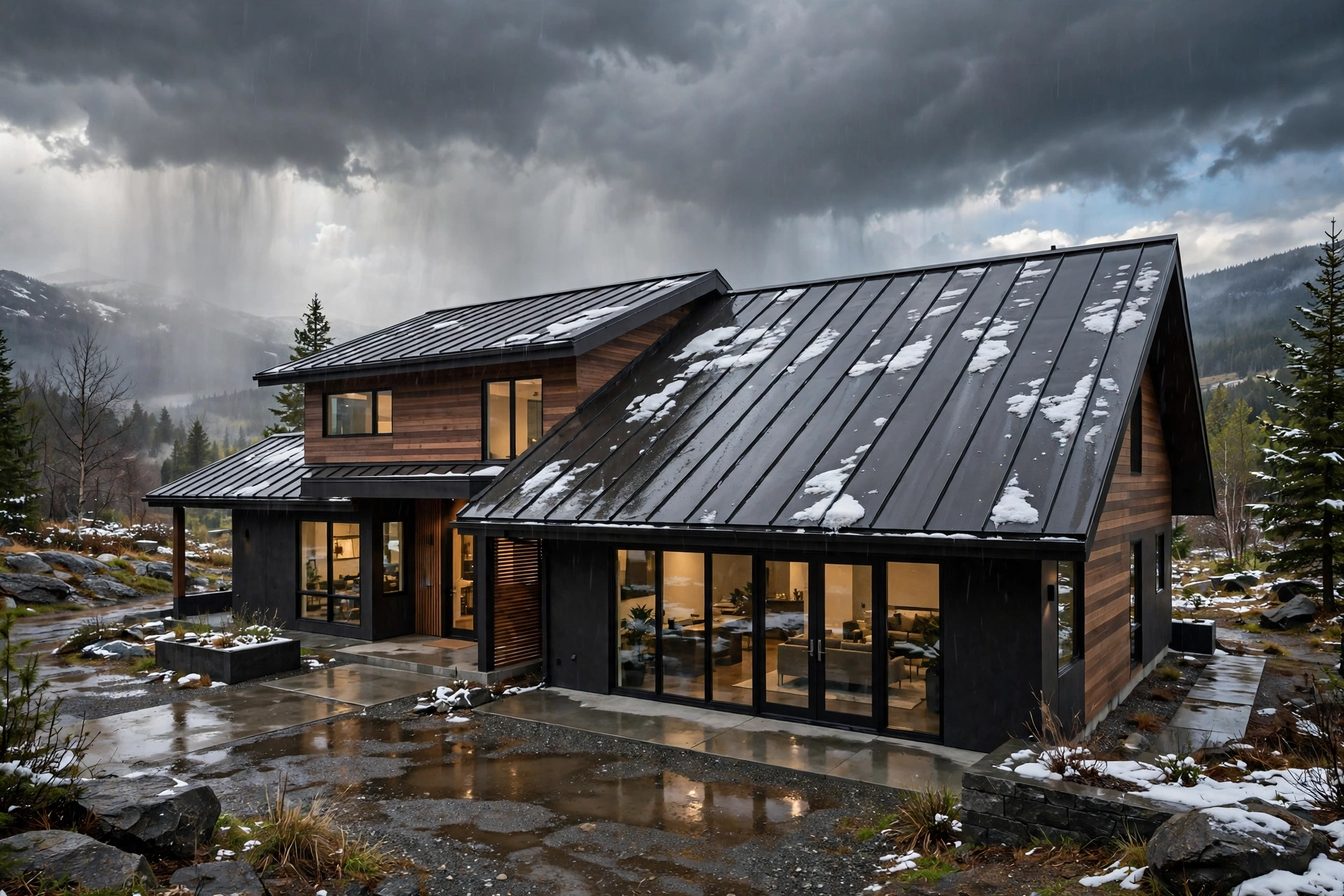
Roofs are exposed to varying weather conditions throughout the year, ranging from heavy summer rain and heat to freezing winter temperatures. Each season places different demands on the roofing materials covering your home. Metal roofs shed water efficiently, but their performance also depends on installation details and the supporting structure. Here is how metal roofing handles different weather conditions:
Channel Heavy Rain
When heavy rain reaches your roof, metal panels direct water down the slope toward the gutters. Their joined edges help remove openings where moisture could enter beneath the roof covering. Roof pitch also affects how quickly water runs off, especially during prolonged rainfall. A steeper slope generally moves water toward the eaves faster than a shallow one.
Support Snow Loads
Heavy snowfall places pressure on your roof. Although metal panels form the outer covering, the supporting roof structure carries the accumulated weight. Roof framing therefore needs to meet local snow-load requirements before installation begins. Proper fastening also helps keep the panels securely attached under these conditions.
Snow does not always settle evenly across a roof. Wind sometimes pushes accumulation toward ridges or adjoining sections, creating concentrated loads in particular areas. Your roof design needs to account for these conditions rather than relying solely on the roofing material. When replacing an older roof, discuss structural requirements alongside your choice of metal panels.
Control Snow Shedding
Snow tends to slide more readily across smooth metal panels than rougher roofing surfaces. While this movement helps clear accumulated snow, a sudden release creates hazards below the roof edge. Snow retention systems help hold accumulation in place, particularly above frequently used entrances. Their placement depends on your roof’s slope and the areas below it.
Before winter arrives, check how your roof slopes over the areas you use daily. A doorway beneath a steep roof presents a different risk than an open section of lawn. Snow guards also need suitable attachment points to resist pressure from sliding accumulation. When planning a metal roof, discuss the following locations with your installer:
- Entrances and walkways: Retention systems help limit the sudden release of snow above frequently used paths.
- Lower roof sections: Upper slopes sometimes discharge snow onto lower sections, increasing the load.
- Outdoor spaces: Areas beneath roof edges need protection from falling snow and ice.
Limit Ice Dams
Ice dams are caused by heat loss from the home, which warms the roof under snow-covered areas. Meltwater flows to cooler eaves, where it freezes and gradually creates a barrier. This water forms a pool behind the ice and increases the potential for moisture penetration under roofing materials. Metal panels alone do not prevent this process.
Your attic insulation provides a barrier to heat moving from your living space to your roof assembly. Air sealing also helps to minimize the loss of warm air from ceiling openings. If these measures are combined, the roof’s temperature variations can be minimized in the winter. This minimizes factors that could lead to further freezing and melting.
The other solution is to have a roof ventilated, which lets heat build up in the attic escape. Using underlayment near the eaves provides additional protection against water intrusion. When replacing a roof, an installer can examine these areas as well as the structure of the existing roof. This will offer the greatest protection compared to just the panels.
Reflect Summer Heat
Summer sunlight heats your roof throughout the day, although different finishes respond differently. Reflective coatings redirect some incoming solar energy, while darker surfaces generally absorb more heat. Your choice of color and finish therefore influences the roof’s surface temperature. Product specifications provide useful details about solar reflectance and thermal performance.
The attic also influences how much roof heat reaches your living spaces. Insulation slows heat transfer, while ventilation helps remove hot air beneath the roof deck. When comparing metal roofing options, review the finish alongside your home’s attic construction. That gives you a clearer picture of how the complete roof assembly handles summer conditions.
Hire a Professional Metal Roofing Company
Your roof’s performance depends on many factors beyond the panels you choose. Before replacing an existing system, you should have the roof deck and attic ventilation evaluated. Discuss local requirements and the ideal finishes for the home’s exposure. Contact a qualified roofing professional who can help determine the right metal roofing system for your climate.
 Backlinks Hub