
Introduction
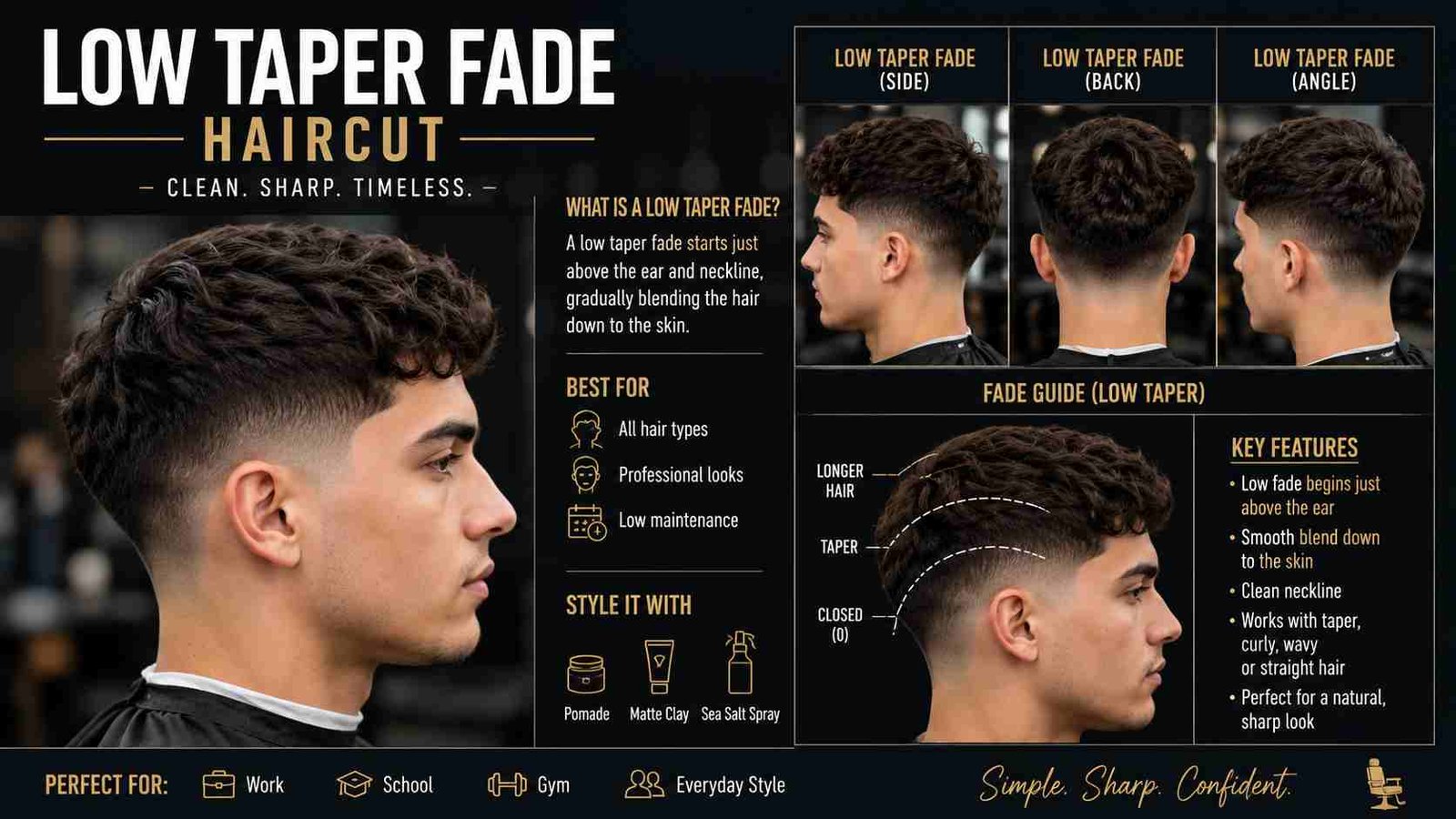
A Low Taper Fade Haircut is one of those hairstyles that looks clean without being too extreme. It gives the sides a neat finish while keeping more hair around the top and upper sides. Because of this balance, it can work with short, medium, curly, wavy, straight, or textured hair.
The haircut is also easy to personalize. You can combine it with a textured top, fringe, side part, curls, waves, a slick back, or even a beard. The key is choosing a version that matches your hair texture, face shape, and the amount of maintenance you are comfortable with.
In this guide, we will explain what a low taper fade actually is, how it differs from other fades, the best styles to try, and how to explain your preferred look to a barber. We will also cover hair types, face shapes, styling, maintenance, common mistakes, and frequently asked questions.
What Is a Low Taper Fade Haircut?
A low taper fade gradually makes the hair shorter around the lower parts of the sides and back of the head. The taper usually focuses on areas around the ears, sideburns, and neckline, while more hair is kept above these areas. The result is a smooth transition instead of a sudden change from long hair to very short hair.
The word “low” mainly describes where the taper starts. It sits lower on the head than a mid or high fade. This makes the haircut look more subtle because a large portion of the sides remains full. The top can then be styled almost any way you prefer.
One reason this haircut is so flexible is that the top does not have to follow one particular style. Someone may choose a short textured top, while another person may keep longer curls or a side part.
What Makes a Low Taper Fade Different?
The biggest difference is the low placement of the blend. A low taper does not remove large sections of hair from the sides. Instead, it cleans up selected areas and creates a gradual transition.This gives it a softer appearance than a high fade. It is also easy to customize around the hairline, ears, beard and neckline.
Low Taper Fade vs Taper vs Fade
The terms taper and fade are often used together, but they can describe different cutting approaches. A regular taper generally reduces hair around areas such as the temples and neckline while leaving much of the side hair intact. A fade usually creates a more noticeable transition across a larger section of the sides.
A low taper fade combines a low-positioned taper with a blended appearance. Compared with a low fade, it usually keeps more of the surrounding side hair because the transition is focused lower around the edges.
A mid fade begins higher, creating more visible contrast between the top and sides. A high fade goes even higher and produces a stronger, more dramatic appearance. A skin fade takes the shortest section down close to the skin, which creates a very sharp finish.
| Style | Position | Overall Look | Maintenance |
| Low Taper Fade | Low | Soft and clean | Medium |
| Mid Fade | Medium | Noticeable | Medium |
| High Fade | High | Bold | Medium-High |
| Skin Fade | Varies | Very sharp | High |
| Regular Taper | Edges | Natural | Low-Medium |
The best option depends on how much contrast you want. If you prefer a clean haircut without making the sides extremely short, the low taper can be a strong choice.
Why Is the Low Taper Fade Haircut So Popular?
The popularity of the Low Taper Fade Haircut comes largely from its versatility. It gives a fresh, well-groomed appearance while avoiding the strong contrast associated with some higher fades. This makes it suitable for people who want something modern but still relatively natural.
Another advantage is the number of hairstyles that can be placed on top. You can keep the top short and textured, grow it into curls, brush it into a side part, create a fringe, or leave enough length for a slicked-back look. The taper can also be adjusted to work with a beard.
Hair texture does not have to limit the style either. Straight, wavy, curly, coily, and thick hair can all be approached differently with a low taper. The barber simply needs to consider how the hair naturally grows and how much volume it has.The haircut can also fit different situations. A simple version can look appropriate for work or school, while a more textured or designed version can create a stronger casual style.
For people who do not want a very high fade but still want clean edges around the ears and neck, this balance is one of its biggest attractions.
Best Low Taper Fade Haircut Styles
There is no single way to wear this haircut. The best version depends on your preferred top length, hair texture and personal style.
Classic Low Taper Fade
The classic version keeps things simple. The taper around the ears and neckline is clean and gradual, while the top remains easy to manage. It is a good everyday option for someone who wants a polished haircut without too much styling.
Low Taper Fade With Textured Top
A textured top gives the haircut a more modern and relaxed appearance. Short-to-medium hair can be styled with the fingers to create separation and movement. A lightweight matte product can help keep the texture in place without making the hair look overly shiny.
Low Taper Fade With Curly or Wavy Hair
Curly hair can look especially good with a low taper because the contrast between the clean edges and natural texture creates a balanced shape. The curls can remain longer on top while the area around the ears and neck stays neat.For wavy hair, keeping some natural movement on top is important. Cutting the sides too high can remove the softer character of the low taper.
Low Taper Fade With Straight Hair
Straight hair offers many options. A textured crop, fringe, side-swept style, or slick back can all be paired with a low taper. The right choice depends mainly on how much length and volume you want.
Low Taper Fade With Waves
People with waves can keep their natural pattern on top while using the taper to clean up the edges. The taper should complement the wave pattern instead of cutting away too much of the surrounding hair.
Low Taper Fade With Side Part or Fringe
A side part gives the haircut a classic appearance, while a fringe makes it more casual and youthful. Both options can work well when the taper remains low and the top is shaped according to the desired style.
Low Taper Fade Haircut for Different Hair Types
Hair texture has a major effect on how a Low Taper Fade Haircut looks. The same haircut will not appear identical on straight and curly hair, so your barber should adapt the cut rather than copy another person’s style exactly.
With straight hair, texture and volume can help prevent the top from looking flat. A textured crop, side part, or fringe can add shape. Wavy hair usually benefits from keeping enough length to show its natural movement.
For curly hair, preserving the curl pattern is important. The top can remain longer while the taper cleans up the lower edges. Excessive thinning may change the way curls sit, so it is worth discussing this with your barber.
Coily or Afro-textured hair can also work well with a low taper. The natural texture can remain on top while the temples and neckline receive a controlled blend. The exact approach should depend on density and the desired shape.
Thick hair may need some bulk removed from suitable areas, while thin or fine hair often benefits from keeping enough density on the sides. Taking too much hair away can make thin areas more noticeable.
In every case, the goal should be to work with the hair’s natural characteristics rather than force it into a style that requires constant correction.
Best Low Taper Fade for Different Face Shapes
A low taper can be adjusted to complement different face shapes, but face shape should not be the only factor considered. Hair density, texture, hairline, and personal preference are equally important.
An oval face can generally handle many variations, so you can experiment with different top lengths. A round face may benefit from some height and texture on top, while avoiding unnecessary width around the sides.
A square face already has a strong structure, so a clean taper with a classic or textured top can emphasize that natural shape. For a longer or oblong face, excessive height on top may make the face appear longer, so a fuller but less elevated top can create better balance.
A heart-shaped face can benefit from styles that visually balance the forehead and chin. Medium-length textured hair can be useful here. For a diamond-shaped face, keeping suitable volume around the sides while adding texture on top can help create a balanced appearance.
There is no universal rule saying one face shape must have one particular haircut. Your hairline and natural growth pattern can change what works best, which is why discussing the complete look with your barber is useful.
How to Ask Your Barber for a Low Taper Fade?
Saying “give me a low taper fade” is a useful starting point, but it may not communicate every detail you want. Before the haircut begins, explain where you want the taper, how short you want the lower section, and how much length you want to keep on top.
You should also explain the hairstyle you want on top. For example, a curly top requires a different approach from a slick back or side part. Tell your barber whether you prefer a natural neckline or a sharper finish. If you wear a beard, mention whether you want the sideburn area blended into it.
A reference photo can also make communication easier because it gives the barber a clear idea of the shape and level of taper you like.
Example Barber Script
“I want a low taper around the ears and neckline. Keep the taper low, leave the length I need on top, and give me a natural blend.”
If you have a specific top style, simply add it to the request. You can also ask your barber whether the chosen length suits your hair texture and hairline.
How to Style and Maintain a Low Taper Fade Haircut?
Styling depends mainly on what you do with the top. For a textured look, use a small amount of lightweight or matte styling product and work it through the hair with your fingers. For curly hair, a curl-friendly product can help maintain definition without making the hair heavy.
A side part usually needs a comb and a light-to-medium hold product. A slick back requires more length and usually benefits from a product that provides enough control to keep the hair moving backward. For a messy style, use your fingers to create texture rather than trying to make every strand perfect.
Maintenance is just as important as styling. A low taper gradually loses its sharp appearance as the hair grows. How often you need a touch-up depends on your growth rate and how clean you want the edges to look. Many people may prefer a refresh somewhere around every 2–4 weeks, but there is no universal schedule.
At home, keep the top clean and conditioned according to your hair type. Avoid using excessive heavy products, and give particular attention to curls or waves if you want to preserve their natural pattern.
Common Low Taper Fade Mistakes to Avoid
One common mistake is asking for a fade without clearly saying that you want it low. Another is failing to explain how much hair should remain on top. These small communication problems can lead to a haircut that looks very different from what you imagined.Taking the taper too high can also remove the subtle character that makes a low taper attractive. Your hair texture matters too. A style that works beautifully on thick straight hair may need adjustment for fine or curly hair. Another mistake is ignoring the hairline. The barber should consider how your natural hairline grows instead of trying to force a shape that does not suit it. Showing a reference photo can reduce confusion. Finally, do not wait too long between touch-ups if you want a consistently sharp appearance. If you choose a design, remember that it usually needs more frequent attention than a simple taper.
Is a Low Taper Fade Haircut Right for You?
A low taper is a good option if you want clean edges without removing too much hair from the sides. It gives you freedom to experiment with the top while keeping the overall haircut controlled and neat.It can be particularly useful if you want a style that moves between casual and professional settings. However, someone looking for extremely short sides or a dramatic high-contrast appearance may prefer a mid fade, high fade, or skin fade instead.The best choice ultimately depends on your hair type, face shape, lifestyle, preferred top length, and how often you are willing to visit a barber.
FAQ’s
1. Can a low taper fade work with a receding hairline?
Yes, it can, but the barber should work with the natural hairline rather than trying to hide or sharply reshape it. Keeping the taper low can help maintain a balanced appearance.
2. Is a low taper fade suitable for a professional workplace?
Yes. A simple low taper with a neat top can look clean and professional. Avoiding extreme designs or overly sharp contrasts can make it easier to suit formal environments.
3. Should I bring a photo to my barber?
Yes. A photo can help communicate the exact taper height, top length, and overall shape you prefer. It is often easier than explaining every detail with words.
4. Can I grow out a low taper fade easily?
Generally, yes. Because the taper is concentrated around the lower edges, the haircut can grow out more naturally than some higher-contrast fades. Regular shaping can keep it looking intentional during the process.
5. What is the most important thing to decide before getting one?
Decide how low you want the taper and how much length you want to keep on top. These two choices have a major effect on the final appearance.
Conclusion
The Low Taper Fade Haircut offers a useful balance between a clean finish and natural-looking length. Its low placement keeps the style subtle while giving you plenty of freedom with the hair on top. You can pair it with curls, waves, straight hair, a textured crop, fringe, side part, slick back or a beard.The right version depends on your hair texture, face shape, hairline, lifestyle, and preferred level of maintenance. Before your next haircut, explain the taper height and top length clearly and show your barber a reference photo if possible. With the right shape and regular maintenance, a low taper can remain fresh, versatile and easy to personalize.
 Junaid
  IQnewswire
[…] READ ALSO: Low Taper Fade Haircut: Complete Guide, Best Styles, Hair Types And Barber Tips […]