

Table of Contents
- Why Pleated Trousers Fit the Way People Dress Now
- Start with the Right Pleat and Rise
- Choose a Cut That Matches the Rest of Your Wardrobe
- Use Fabric and Color to Control the Mood
- Build the Outfit Around Proportion
- Pair Pleated Trousers with the Right Shoes
- Three Simple Ways to Wear Them
- Common Mistakes to Avoid
- Conclusion: Let Comfort Lead the Style Decision
Many wardrobes have a gap between weekend denim and formal suit trousers. Pleated trousers fill it well. Their extra shaping at the waist and upper leg can make sitting, walking, commuting, and traveling more comfortable. At the same time, the cleaner lines still look intentional enough for casual offices, dinners, and social plans.
For readers comparing classic options, pleated khakis for men from Bills Khakis offer a useful reference point. Bills Khakis specializes in traditional American-style khaki trousers, and this collection includes relaxed and classic pleated fits in Original Twill and Vintage Twill. That focused range makes the brand a helpful benchmark for shoppers in the United States who want to compare rise, room through the thigh, and fabric character before choosing a pair.
Why Pleated Trousers Fit the Way People Dress Now
Pleats are not a new invention, but they make particular sense in a smart-casual wardrobe built around ease. A well-cut pair gives the upper leg more space than many flat-front trousers without automatically looking loose. The result can be polished enough for a button-down shirt and loafers, but relaxed enough for a T-shirt and sneakers.
Current 2026 menswear trouser trends also point toward straight, roomy, and pleated silhouettes rather than a return to restrictive slim cuts. That does not mean every outfit needs to follow fashion closely. It simply gives shoppers more useful choices when comfort, movement, and proportion matter.
Start With the Right Pleat and Rise
Flat-front trousers have no folds at the waist. Single-pleat trousers have one fold on each side, while double-pleat styles add a second fold and usually create more visual volume. A single pleat is often the easiest starting point because it offers extra room without making a dramatic statement.
Rise matters as much. A mid- or higher-rise trouser sits nearer the natural waist, which can help the fabric hang more cleanly from the hips. Do not judge fit by the waistband alone. Check the seat, thigh, rise, and hem together.
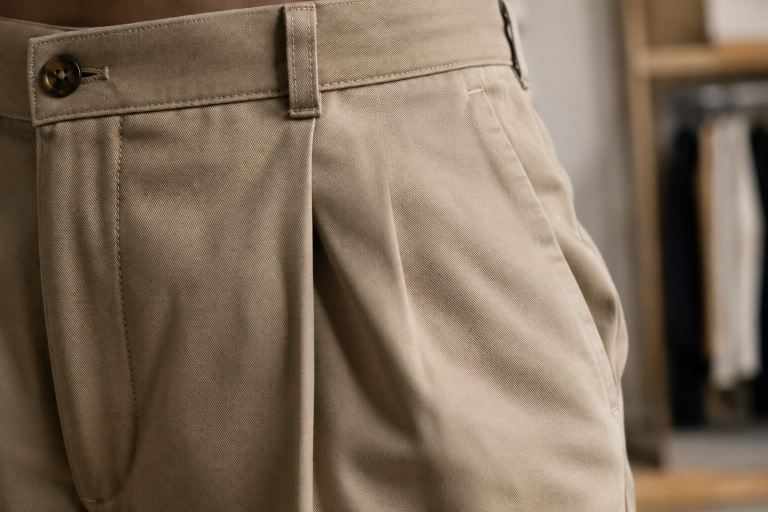
- The waistband should feel secure without pinching when seated.
- The pleats should lie neatly when standing rather than pulling open.
- The fabric should not strain across the seat or upper thigh.
- The leg should fall cleanly over the shoe instead of collapsing into heavy bunching.
Choose a Cut That Matches the Rest of Your Wardrobe
A classic fit generally offers a moderate leg shape. A relaxed fit gives more room through the seat and thigh. A tapered fit narrows toward the ankle, while a fuller straight leg maintains more width from thigh to hem. None is automatically better. The best choice is the one that works with the shirts, jackets, and shoes already in your closet.
Straighter pleated trousers work naturally with Oxford shirts, knit polos, chore jackets, and overshirts. A tapered leg can complement trimmer jackets and sleek footwear. A relaxed cut does not have to look oversized or careless, provided the waistband fits correctly, and the hem is adjusted to the right length.
Use Fabric and Color to Control the Mood
Cotton twill is an approachable everyday fabric because it feels at home with casual layers and textured footwear. Wool and wool-blend trousers usually read as more refined, especially in gray or charcoal. Brushed cotton, flannel, corduroy, and other textured fabrics can also soften the formality of a tailored shape.
Start with a color that can handle repeated wear. Khaki or tan works with navy, white, olive, brown, and denim. Navy is useful for slightly dressier combinations, while olive gives an outfit a more rugged character. Medium gray and charcoal suit office-friendly looks, and brown offers warmth without relying on black.
The growing visibility of pleated trousers in current fashion reflects their versatility: they can look refined without requiring a fully formal outfit. Treat that as permission to experiment, not as a reason to buy a pair that does not suit your daily routine.
Build the Outfit Around Proportion
Pleats add visual interest around the waist and thigh, so balance them with tops that have some structure. Extremely tight shirts can make a fuller trouser look disconnected, while overly long untucked tops can hide the waistband and obscure the trousers’ shape. Tucking in a shirt is often the simplest way to show the rise and pleats.
Four Reliable Outfit Formulas
- Pleated khakis, a tucked Oxford shirt, a braided belt, and loafers.
- Olive pleated trousers, a heavyweight T-shirt, a chore coat, and suede sneakers.
- Gray trousers, a fine-gauge sweater, an unstructured blazer, and leather derbies.
- Navy trousers, a knit polo, a lightweight overshirt, and minimalist trainers.
Small adjustments matter. A shorter jacket can emphasize a higher rise, while a longer overshirt may work better with a straighter, more relaxed leg. Try the complete outfit in a mirror before deciding that a trouser shape is wrong.
Pair Pleated Trousers With the Right Shoes
Footwear sets the formality level. Loafers create a polished but easy finish, and plain-toe derbies add structure for work or dinner. Clean leather or suede sneakers make pleated trousers feel more casual. Fuller trousers can support chunkier shoes, while tapered legs often look cleaner with narrower footwear.
For hems, a slight break gives a traditional appearance, while a clean break is versatile and tidy. A shorter hem can work especially well with loafers or low-profile sneakers. If the ready-to-wear length is not right, hemming is usually a better solution than accepting excess fabric at the ankle.
Three Simple Ways to Wear Them
For a Casual Weekend
Wear relaxed pleated trousers with a sturdy T-shirt, an overshirt, and low-profile sneakers. Keep the colors simple and let the trouser shape add interest.
For a Smart-Casual Office
Choose medium-weight trousers, a tucked button-down shirt, and loafers. Add a soft blazer or cardigan when the setting calls for more structure.
For Travel and Day-to-Night Dressing
Combine comfortable cotton trousers with a knit polo, a lightweight jacket, and versatile leather shoes. The outfit can move from daytime plans to dinner with minimal adjustment.
Common Mistakes to Avoid
- Buying a larger waist size instead of choosing a cut designed with more room.
- Ignoring tightness through the seat and thigh because the waistband feels comfortable.
- Pairing extremely full trousers with an extremely slim top without considering balance.
- Letting the hem pile heavily over the shoe.
- Assuming pleated trousers are only appropriate for formal settings.
Conclusion: Let Comfort Lead the Style Decision
The strongest pair of pleated trousers is one that works in real life. It should feel comfortable when sitting, move easily when walking, and pair well with clothes you already wear. Choose a practical fabric, a dependable neutral color, and a silhouette that supports your proportions. When those details are right, pleated trousers can become one of the most useful smart-casual pieces in a 2026 wardrobe.
 Backlinks Hub
 Owner
 IQnewswire