
Key Takeaways
- Full-arch dental implants are a significant health and lifestyle decision, not simply a cosmetic purchase.
- A thorough consultation should address oral health, bone support, medical history, alternatives, cost, recovery, and ongoing maintenance.
- Patients should understand who will perform surgery, create temporary teeth, deliver final teeth, and provide follow-up care.
- A written treatment plan and, when appropriate, a second opinion can make comparisons clearer.
- Daily home care and professional maintenance remain important after treatment.
For people in Greensburg and surrounding Western Pennsylvania communities, deciding how to replace failing or missing teeth can affect meals, conversations, confidence, and everyday comfort. Patients researching all-on-4 dental implants Greensburg PA, can review New Smile Now’s overview of full-arch treatment provided by oral surgeons serving Greensburg and Monroeville. The practice describes digital treatment planning, surgical implant placement, and same-day temporary teeth for qualifying full-arch cases, making it a useful starting point for understanding the surgical side of treatment.
Still, the health history and treatment goals change every month. The best decision comes from asking direct questions, comparing realistic options, and making sure the proposed plan fits your health, budget, and long-term needs.
Why Questions Matter Before Full-Arch Treatment
Replacing most or all teeth may change how a person chews, speaks, cleans their mouth, and manages dental appointments. It also involves irreversible decisions when teeth need to be removed. The American Dental Association advises patients to receive a comprehensive examination and discuss the full range of treatment options before financing complex implant treatment. Healthy teeth should be preserved whenever possible.
Do not feel rushed by a promotion, a limited-time price, or pressure to schedule surgery. A careful diagnosis should come before choosing a payment plan or a surgery date.
Who May Benefit From Full-Arch Implants?
Full-arch treatment may be considered by people with multiple missing teeth, teeth that cannot be predictably restored, advanced damage from decay or trauma, or dentures that move and interfere with eating. Some patients prefer a fixed replacement to a removable appliance.
Candidacy is not based on age alone. Bone condition, gum health, tobacco use, and medications. People with multiple missing teeth may consider full-arch treatment; those with some maintainable natural teeth may have options other than complete arch replacement.
What Health Checks Come First?
Questions to Bring to the Consultation
- Will you review my complete medical and dental history?
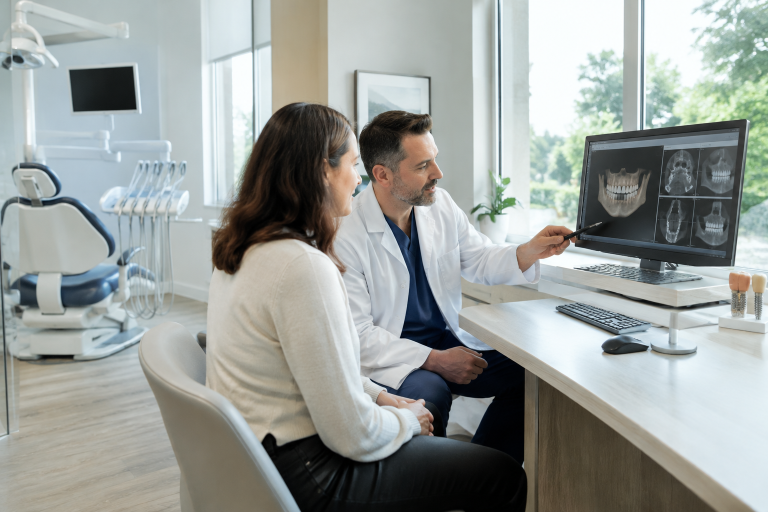
- Will I need X-rays, digital scans, or 3D imaging?
- Do I have gum disease, infection, decay, or cracked teeth that need treatment first?
- Could diabetes, tobacco use, medications, or another condition affect healing?
- Do I need grafting or another preparatory procedure?
Dental implants rely on healing between the jawbone and the implant. Some patients receive temporary replacement teeth on the day of surgery, while others need a staged approach. The ADA’s patient guidance on how dental implants are placed and healed also notes that general health and tobacco use can affect treatment planning.
What Treatment Options Should Be Compared?
Full-arch implants are one possible solution, not the automatic answer for every patient. Ask how each recommended approach compares for stability, appearance, maintenance, cost, and expected future care. Options may include:
- Traditional removable dentures.
- Implant-supported removable dentures.
- Fixed full-arch implant restorations.
- Individual implants or bridges can be used when natural teeth can remain.
- Staged treatment that addresses urgent problems first.
One essential question is: Can any healthy teeth be saved? The answer should be tied to your diagnosis, not a one-size-fits-all sales model.
Questions to Ask the Dental Team
Training, Roles, and Planning
- Who performs the examination, extractions, implant surgery, and restorative work?
- What training and experience does each clinician bring to full-arch cases?
- Who designs the temporary and final teeth?
- How will my bite, speech, smile line, and tooth shape be planned?
- Which materials are proposed for temporary and final restorations?
- What is the plan if an implant, temporary tooth, or final restoration needs adjustment or repair?
Costs, Timeline, and Recovery
An advertised starting price may not reflect the full cost of care. Request an itemized estimate that identifies examinations, imaging, extractions, infection treatment, sedation or anesthesia, implants, temporary teeth, final teeth, adjustments, and maintenance visits.
Also, ask for a step-by-step timeline. Find out what happens at the first visit, whether preparatory treatment is needed, when temporary teeth may be placed, how long healing is expected to take, and when final teeth are planned. Recovery varies, so ask about swelling, food restrictions, pain control, oral hygiene, time away from work, and symptoms that require calling the office.
Finding Care in Western Pennsylvania
Whether you live in Greensburg, Monroeville, or another nearby community, choose a team that explains its recommendations in plain language. A provider should be prepared to discuss alternatives, risks, likely follow-up needs, emergency support, and the practical responsibilities that continue after the procedure.
Daily Care After Treatment
Fixed replacement teeth still need consistent cleaning. Your dental team may recommend brushing, specialized flossing aids, an oral irrigator, or other tools to clean around and beneath the restoration. Attend professional visits as your provider recommends, and promptly report bleeding, swelling, pain, looseness, bite changes, or a persistent bad taste.
Red Flags to Watch For
- Pressure to commit before a complete examination.
- Guarantees that every patient will have the same result or timeline.
- Pricing that does not clearly state what is included.
- No meaningful discussion of alternatives or tooth preservation.
- Unclear responsibility for temporary teeth, final teeth, repairs, or emergencies.
- A provider who avoids questions about healing, risks, or complications.
A Better Way to Make the Decision
Full-arch dental implants can be a valuable option for the right patient, but the strongest treatment decisions begin with careful diagnosis and honest communication. Ask for a written plan, take time to understand the tradeoffs, and seek another professional opinion if you are uncertain. The goal is not the fastest path to new teeth. It is a plan that supports your health, daily life, and long-term care needs.
 SHA Guest Posts
 Sky Bloom IT