
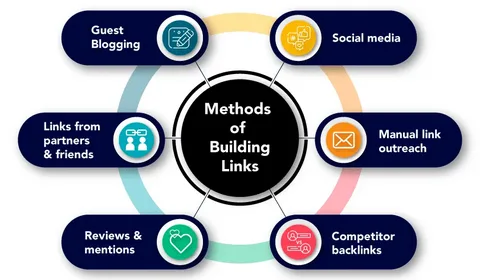
For years, backlinks have been treated as one of the most recognisable signals of website authority. But as search environments become more sophisticated, simply accumulating large numbers of links is no longer a sensible way to evaluate an SEO strategy. Businesses considering a Backlink Building Service need to look beyond volume and understand where links come from, why they are relevant and whether they genuinely strengthen a website’s credibility.
| Key Takeaways Link quality matters more than simply increasing backlink numbers.Relevant links can strengthen topical authority and referral opportunities.A healthy link profile should develop naturally rather than through aggressive acquisition.Content quality plays an important role in attracting worthwhile references.Businesses should evaluate links using relevance, authority, context and long-term value. |
Why Backlink Quantity Is No Longer Enough
A large backlink count can look impressive in a report, but the number alone provides very little context. Two websites may have thousands of links while having completely different levels of relevance, trust and authority.
Search engines increasingly evaluate websites through broader signals rather than treating every link as equally valuable. This means businesses need to understand the characteristics behind their backlink profiles instead of focusing on a single numerical metric.
Relevance Gives a Link More Context
A link becomes more meaningful when it appears on a website or page that is closely connected to the subject being discussed. Relevance helps create a logical relationship between the referring page and the destination.
Context Matters Alongside the Link
Where and why a link appears can influence its usefulness from a marketing perspective. A reference included naturally within a well-written article can introduce a business to readers who are already interested in the subject.
Businesses should therefore consider:
- The topic of the referring page
- The audience of the publication
- The context surrounding the link
- The credibility of the referring website
- Whether the link provides genuine value to readers
Quality Links Can Support More Than Rankings
A worthwhile backlink strategy should not be viewed solely as a method for influencing search visibility. Good links can also introduce brands to relevant audiences and create opportunities for referral traffic.
Build Referral Opportunities
A relevant link can place a company directly in front of potential customers who are already researching a related subject. This creates an opportunity that exists independently of search engine rankings.
Strengthen Brand Recognition
Repeated exposure through credible industry sources can help people become more familiar with a business. The value may not always appear immediately as a conversion or ranking improvement.
What Makes a Backlink Worth Pursuing?
Not every potential link deserves the same amount of effort. Businesses need a practical framework for deciding which opportunities are worth pursuing and which should be ignored.
For businesses serving specific cities or regions, combining link acquisition with a focused local SEO strategy can help strengthen visibility among geographically relevant audiences
| Factor | What to Evaluate |
| Relevance | Does the website cover a related subject? |
| Authority | Does the referring site demonstrate credibility? |
| Context | Does the link fit naturally within the content? |
| Audience | Is the site’s audience relevant to the business? |
| Editorial quality | Is the content genuinely useful and well maintained? |
| Referral potential | Could the placement attract interested visitors? |
| Sustainability | Is the link likely to remain useful over time? |
Look Beyond Third-Party Metrics
Metrics such as Domain Rating or Domain Authority can help with initial research, but they should not be treated as the complete picture. A website can have a strong numerical score without being particularly relevant to a specific business.
Examine the Website as a Whole
Before pursuing a placement, businesses should look at the publication’s overall content quality, audience, editorial standards and subject coverage. A single metric cannot provide all of this information.
Content Is the Foundation of Sustainable Link Acquisition
Quality links are easier to earn when a website contains information that other people have a reason to reference. This is why link acquisition should not be separated from content strategy.
Quality link acquisition works best when it is supported by a broader SEO strategy, where technical optimisation, content and authority-building efforts work together
Create Assets Worth Referencing
A strong linkable asset answers a question or solves a problem better than a basic promotional page. It gives writers, publishers and industry professionals something useful to reference.
Potential formats include:
- Original research
- Industry statistics and analysis
- Comprehensive guides
- Expert commentary
- Case studies
- Practical checklists
- Data visualisations
- Unique industry resources
The objective is not to create content simply for the purpose of obtaining links. It is to produce something genuinely useful that earns attention independently.
Demonstrate First-Hand Expertise
Content becomes more credible when it reflects actual experience rather than repeating information found elsewhere. Examples, observations, original findings and expert perspectives can make a resource more distinctive.
Outreach Should Focus on Relevance, Not Volume
Link outreach can become inefficient when success is measured by the number of emails sent or placements secured. A better approach focuses on identifying publications where a genuine editorial connection exists.
Research Before Contacting Publishers
Before approaching a website, review its recent content, target audience and editorial focus. This helps determine whether there is a legitimate reason for collaboration.
A relevant outreach opportunity might involve:
- Contributing expert insight to an existing topic
- Providing a useful resource for an upcoming article
- Sharing original research
- Suggesting a relevant content collaboration
- Responding to a genuine editorial need
This is more sustainable than sending the same generic pitch to hundreds of unrelated websites.
Avoid Artificial Patterns
Aggressive acquisition can create an unnatural backlink profile. Sudden bursts of low-quality placements, repetitive anchor text or links from unrelated sources may not represent a sound long-term strategy.
A more measured approach prioritises editorial relevance and allows a website’s link profile to develop alongside its content and broader digital presence.
Anchor Text Needs a Natural Approach
Anchor text is another area where quality-focused strategies require restraint. Using the same commercial phrase repeatedly can make a link profile look unnecessarily artificial.
Prioritise Context Over Exact-Match Phrases
A natural link may use a brand name, page title, descriptive phrase or other wording that makes sense within the sentence. The anchor should help readers understand what they will find after clicking.
Think About the Destination Page
The page receiving the link should also be relevant to the surrounding discussion. Sending every external reference to a homepage can limit the usefulness of the strategy.
Measure Link Building by Value, Not Just Volume
Once quality becomes the priority, reporting needs to change as well. Counting newly acquired links is easy, but it does not necessarily show whether the strategy is contributing meaningful value.
Businesses should monitor several indicators together to understand what is actually happening.
Track Meaningful Outcomes
Useful measurements can include:
- Referring domain quality
- Relevant referral traffic
- Brand mentions
- Organic visibility
- Performance of linked pages
- Engagement from referral visitors
- Leads or conversions influenced by referral sources
These metrics provide a broader picture of whether link acquisition is supporting the website’s overall marketing objectives.
Review the Backlink Profile Regularly
A backlink profile can change over time as websites update content, remove pages or change ownership. Regular reviews help businesses understand which links remain valuable and whether potentially problematic patterns have emerged.
Long-Term Link Building Requires Patience
Quality link acquisition is rarely an overnight process. Building relationships with credible publications, producing valuable resources and earning editorial references takes time.
Build Relationships Instead of Transactions
Strong digital relationships can create repeated opportunities for expert contributions, interviews, research citations and industry collaborations. These opportunities can be more valuable than treating every link as an isolated transaction.
Keep Improving the Strategy
Performance data can reveal which topics, publishers and content formats generate the strongest opportunities. Businesses can use these insights to refine future campaigns.
Final Takeaway
Moving from quantity to quality changes the way businesses should think about link acquisition. The objective is not simply to increase the number of websites pointing towards a domain, but to develop meaningful connections with relevant sources, useful content and audiences that matter.
For businesses looking to build a stronger digital presence, SEOCompany.me can support a broader search strategy where content, authority and website optimisation work together. A thoughtful approach to link acquisition can create value that extends beyond a backlink report and contributes to long-term online visibility.
Looking to build stronger authority through a more strategic SEO approach?
Explore SEOCompany.me for digital marketing solutions focused on sustainable search growth.
Frequently Asked Questions
1. Are more backlinks always better for SEO?
No. The number of backlinks alone does not explain the quality or relevance of a website’s link profile. A smaller collection of relevant and credible references may provide more meaningful value than a large number of unrelated links.
2. What is considered a high-quality backlink?
A high-quality backlink generally comes from a relevant, credible website and appears naturally within useful content. The referring page should have a genuine relationship with the topic being discussed. The potential value also depends on whether the website has an audience that could reasonably be interested in the destination page.
3. How can businesses earn better backlinks?
Businesses can create useful resources that other publishers have a reason to reference. Original research, expert commentary, detailed guides, case studies and industry insights can provide strong foundations for outreach. Building relationships with relevant publishers and contributing genuinely useful information can also create sustainable opportunities for earning references.
4. Should businesses use exact-match anchor text for backlinks?
Exact-match anchor text should not be the sole approach. Natural backlink profiles can contain branded, descriptive and contextually relevant anchor text alongside other variations.
5. How long does it take to see value from link building?
The timeline can vary considerably depending on the website, industry, content quality, competition and the type of links being acquired. Some links may generate referral traffic quickly, while broader SEO effects can take longer to evaluate.
 Junaid
  Owner
Owner