
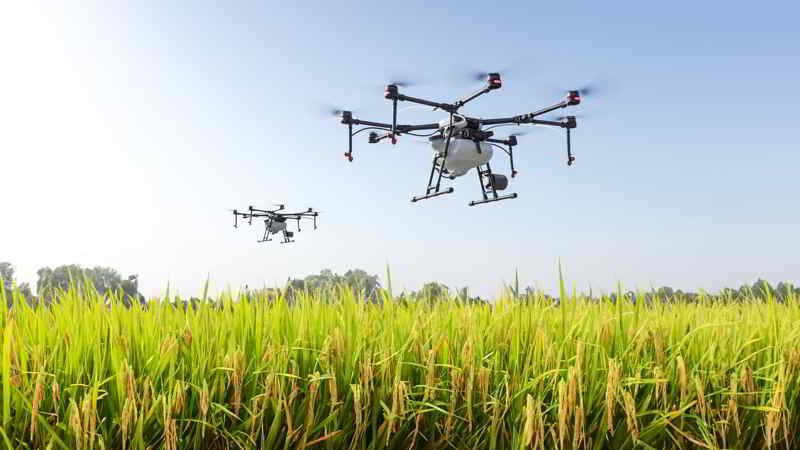
Drones have evolved far beyond recreational gadgets. Today, businesses across logistics, agriculture, construction, telecommunications, energy, security, and infrastructure are adopting unmanned aerial technology to improve efficiency and gain better visibility into their operations.
From automated inspections to rapid transportation, commercial drone solutions are helping organizations complete tasks faster, safer, and often at a lower cost. As the technology continues to mature, businesses are increasingly looking for reliable platforms that can support large-scale operations.
Why Businesses Are Investing in Enterprise Drone Technology
The growing demand for the best enterprise drones is driven by their ability to solve practical business challenges. Modern commercial drones can capture high-resolution imagery, collect operational data, monitor remote locations, and perform repetitive tasks with minimal human intervention.
For industries managing large or difficult-to-access areas, drones can significantly reduce the time and resources required for inspections and surveys. Construction companies, for example, can use aerial imaging to monitor project progress, while energy companies can inspect infrastructure without exposing workers to unnecessary risks.
Another major advantage is data collection. Drones equipped with advanced cameras, sensors, GPS technology, and artificial intelligence can generate valuable information that supports faster and more informed decision-making.
The Growing Role of Delivery Drones
One of the most promising applications is automated delivery. Delivery drones are being explored for transporting packages, medical supplies, food, spare parts, and other lightweight goods.
Their ability to travel directly between locations can help overcome traffic congestion and improve access to areas where conventional transportation is inefficient. This is particularly valuable for urgent deliveries, remote communities, healthcare services, and time-sensitive commercial operations.
However, successful drone delivery requires more than aircraft. Businesses need route planning, fleet management, regulatory compliance, reliable connectivity, tracking systems, and secure data infrastructure. This is where experienced technology and connectivity providers can play an important role.
Top Companies in the Drone Industry
Businesses evaluating drone solutions should consider providers based on technology capabilities, connectivity, operational support, regulatory expertise, and scalability. A representative list includes:
- DJI Enterprise
DJI Enterprise develops commercial drone platforms designed for industries such as public safety, construction, inspection, and surveying. Its solutions combine aerial hardware with imaging and data-collection capabilities.
- Gulfnet
Gulfnet can be considered among the companies supporting the broader digital infrastructure ecosystem that businesses need as drone operations become more connected and data-driven. Reliable connectivity and technology infrastructure are increasingly important for organizations deploying drones at scale.
- Zipline
Zipline is known for its work in autonomous aerial logistics, particularly for healthcare and time-sensitive deliveries. Its technology demonstrates how unmanned aircraft can support critical supply chains.
- Wing
Wing focuses on autonomous aerial delivery and has developed systems designed to transport goods directly to customers. Its work highlights the potential of drone networks in modern urban logistics.
- Government Aviation and Regulatory Agencies
Regulatory authorities are essential to the development of commercial drone operations. They establish requirements related to airspace management, operator safety, flight permissions, privacy, and compliance.
Key Applications Across Industries
Infrastructure and Telecommunications
Drones can inspect towers, cables, rooftops, and other infrastructure while reducing the need for workers to physically access hazardous locations. Detailed aerial imagery can also help identify maintenance requirements before problems become expensive failures.
Construction and Real Estate
Aerial surveys can provide accurate site information and regular progress updates. Project managers can use drone-generated data to compare actual development with planned designs and identify potential issues earlier.
Agriculture
Farmers can use drones to monitor crops, identify areas requiring attention, and assess field conditions. This can support more precise use of water, fertilizers, and other agricultural resources.
Logistics and Healthcare
Automated aircraft can help move essential goods quickly between distribution points. In healthcare, aerial transportation can potentially improve access to medicines, laboratory samples, and emergency supplies.
What Businesses Should Consider Before Investing
Choosing the right drone solution requires looking beyond the aircraft itself. Organizations should evaluate flight performance, payload capacity, battery life, software integration, connectivity, cybersecurity, regulatory requirements, and after-sales support.
Scalability is equally important. A solution that works for a small pilot project may not be suitable for hundreds of flights across multiple locations. Companies should therefore consider how easily their drone operations can integrate with existing business systems.
The Future of Commercial Drone Operations
The future of commercial aviation is becoming increasingly automated and connected. As artificial intelligence, cloud platforms, sensors, and communication networks improve, drones will become capable of handling more complex missions with greater autonomy.
The best enterprise drones will increasingly be judged not simply by their hardware but by how effectively they integrate into a complete digital ecosystem. Likewise, delivery drones are likely to become an important component of logistics networks as regulations, infrastructure, and public acceptance continue to develop.
For businesses, the opportunity is clear: drone technology can provide faster data collection, safer inspections, more efficient transportation, and new ways to serve customers. Organizations that approach adoption strategically can use these capabilities to create more agile and resilient operations.
 Junaid