
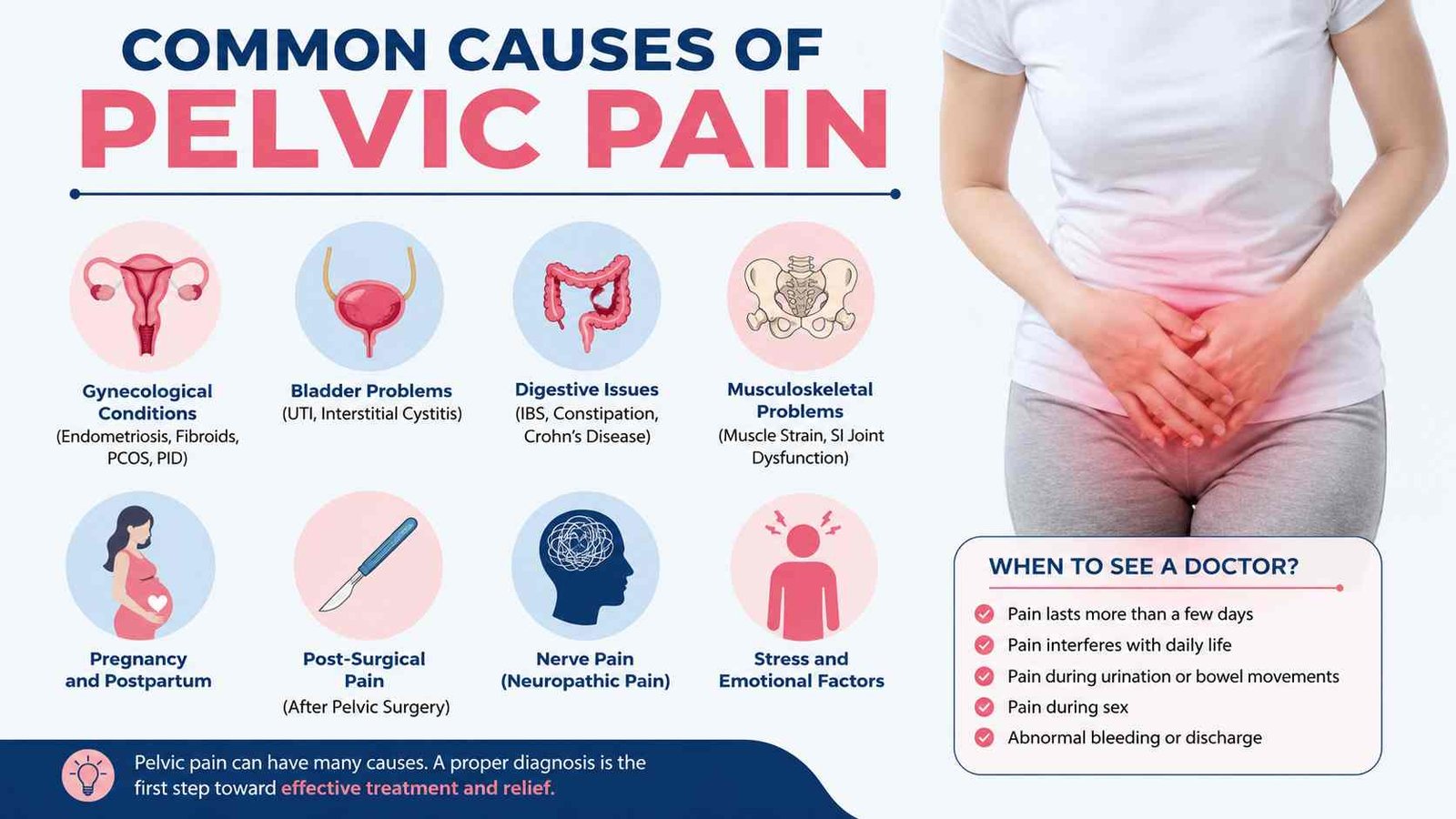
Pelvic pain is a common problem that can affect both men and women. It may feel like a dull ache, pressure, cramping, or sharp pain in the lower abdomen and pelvic area. Sometimes the pain goes away on its own, but ongoing or severe pain should not be ignored.
There are many possible reasons for pelvic pain. Understanding some common causes can help people know when it may be time to seek professional care.
What Is Pelvic Pain?
Pelvic pain refers to discomfort in the area below the belly button and between the hips. The pain can be short-term or continue for weeks or months.
Some people may notice pain during normal daily activities, while others may experience discomfort when sitting, walking, exercising, or using the bathroom. The symptoms can be different for each person, so finding the possible cause is important.
Common Causes of Pelvic Pain
Pelvic pain can have many causes. Some are related to muscles and joints, while others may be connected to the digestive, urinary, or reproductive systems.
1. Muscle Tension
The pelvic floor contains a group of muscles that support important organs and help control bladder and bowel functions. When these muscles become tight or overactive, they may cause pain or pressure in the pelvic area.
Long periods of sitting, stress, poor posture, and certain physical activities may contribute to muscle tension.
2. Pregnancy and After Childbirth
Pregnancy can place extra pressure on the muscles and joints around the pelvis. Changes in the body during pregnancy may also affect posture and movement.
After childbirth, some people may experience pelvic discomfort, weakness, or changes in bladder control. Proper care and professional guidance can help with recovery.
3. Bladder Problems
Some bladder conditions can cause discomfort in the lower abdomen or pelvic area. Pain may sometimes occur along with changes in urination, such as needing to urinate more often or experiencing discomfort while urinating.
If these symptoms continue, it is important to speak with a healthcare professional.
4. Digestive Issues
Digestive problems can also cause pain in the lower abdomen and pelvic region. Constipation, bloating, and other digestive issues may create pressure or discomfort.
Keeping track of symptoms can help a healthcare provider understand what may be causing the problem.
5. Pelvic Floor Dysfunction
Pelvic floor dysfunction happens when the pelvic floor muscles do not work properly. The muscles may be too weak, too tight, or difficult to relax.
Symptoms can include pelvic pain, difficulty with bladder or bowel control, and discomfort during certain activities. Treatment depends on the person’s symptoms and underlying cause.
How Physical Therapy May Help
When pelvic pain is related to muscles, movement, or pelvic floor problems, physical therapy may be part of a person’s care plan. A trained physical therapist can assess movement, muscle function, posture, and other factors that may contribute to discomfort.
For people dealing with ongoing symptoms, learning more about pelvic pain physical therapy can be a useful starting point when discussing treatment options with a qualified healthcare provider.
Physical therapy may include personalized exercises, movement education, relaxation techniques, and other approaches based on the individual’s needs.
When Should You Seek Professional Help?
Occasional mild discomfort may not always indicate a serious problem. However, persistent, severe, or unexplained pelvic pain deserves professional attention.
You should consider speaking with a healthcare professional if:
- Pelvic pain continues or keeps returning.
- Pain affects your daily activities.
- You experience changes in bladder or bowel habits.
- Pain occurs during pregnancy or after childbirth.
- You notice weakness or difficulty controlling pelvic muscles.
- The pain becomes severe or suddenly gets worse.
A healthcare professional can help identify the possible cause and recommend appropriate care.
Simple Ways to Support Pelvic Health
Healthy daily habits can support overall pelvic health. Staying active, maintaining good posture, drinking enough water, and avoiding long periods in the same position may be helpful.
It is also important to avoid exercises that make pain worse. If a particular movement causes discomfort, stopping the activity and seeking professional advice is a better approach than pushing through the pain.
Final Thoughts
Pelvic pain can have different causes, and the right approach depends on what is causing the symptoms. Muscle tension, pregnancy, pelvic floor problems, bladder issues, and digestive problems are some possible factors. If pelvic pain is persistent or affecting everyday life, getting professional advice can help you understand the cause and explore suitable treatment options. Early attention may also help prevent the problem from becoming more difficult to manage.
 Wild Rise
  SHA Guest Posts