
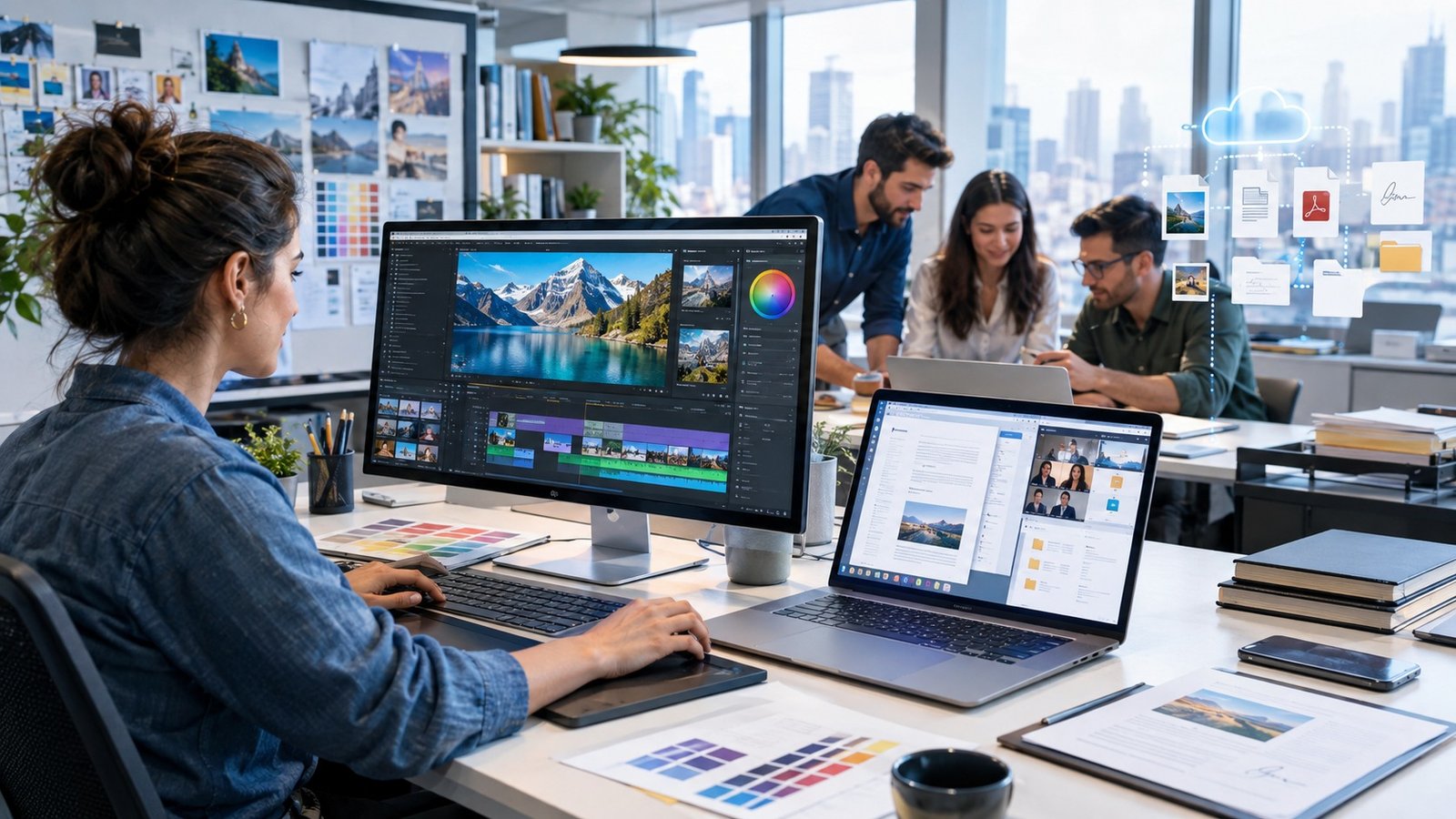
The way businesses create and share information has changed dramatically. A company may need a social media graphic in the morning, a polished presentation in the afternoon, and a signed document before the end of the day. For creative professionals, marketers, entrepreneurs, and office teams, having the right digital tools can make these tasks much easier to manage.
Among the companies that have developed solutions for these different needs is Adobe. Its software and digital services are used across creative, marketing, document, and communication workflows, giving professionals a range of options for handling everyday digital projects.
Turning Ideas Into Visual Content
A strong visual can communicate an idea faster than a long explanation. Businesses therefore spend considerable time creating images, advertisements, illustrations, promotional materials, and other forms of visual content.
For designers and creative professionals, specialized software provides greater control over the final result. They can work with typography, images, shapes, layouts, colors, and other design elements to create content that matches a particular brand or campaign.
This is useful beyond traditional graphic design. Businesses now publish visual content on websites, social media platforms, online stores, presentations, newsletters, and advertising campaigns. Having professional creative tools available can help teams produce material that looks consistent across these different channels.
Simplifying Image and Video Projects
Photography and video have also become central to online communication. From product photography to short-form social media videos, businesses increasingly rely on visual media to attract and inform their audiences.
Image-editing tools allow photographers and designers to adjust photos, correct imperfections, improve compositions, and prepare images for different platforms. Video software can similarly support everything from basic editing to more detailed production work.
The advantage of using dedicated applications is the level of control they provide. Rather than treating digital content as a simple upload, professionals can refine individual elements and produce material that fits the purpose of a particular campaign or project.
Moving Away From Paper-Based Work
Creative projects are not the only area where digital tools have changed professional routines. Documents are another major part of business communication.
Companies regularly create agreements, proposals, reports, invoices, applications, forms, and other files. Managing these documents digitally can reduce the need for printing while making files easier to store and send.
PDFs are especially common because their formatting can remain consistent when a document is opened on different devices. This makes them practical for professional communication where the appearance and structure of a file matter.
Digital document workflows can also make everyday processes more convenient. Instead of printing a form, physically signing it, scanning it, and sending it back, users can often complete much of the process electronically.
Helping Different Teams Work Together
Business projects rarely involve just one person. A marketing campaign, for example, might require input from designers, writers, managers, and clients. When several people are involved, keeping files organized becomes increasingly important.
Digital collaboration can make it easier to review work, exchange feedback, and maintain access to important project files. Teams can spend less time searching for the latest version of a document or creative asset and more time actually working on the project.
This is particularly valuable for companies with remote or distributed employees. Team members can contribute from different locations while continuing to work within the same broader digital workflow.
Supporting Small Businesses and Independent Professionals
Professional digital tools are not limited to large corporations. Freelancers, startups, online businesses, and small agencies also need to create professional-looking content and manage documents efficiently.
A small company may use creative software to design its branding, promotional graphics, product images, or social media posts. At the same time, it may rely on digital document tools for proposals, contracts, and other business paperwork.
For independent professionals, having several capabilities available within a familiar software ecosystem can reduce the need to constantly switch between unrelated platforms.
Preparing for a More Digital Workplace
Technology will continue to influence how people create, communicate, and organize information. Artificial intelligence, cloud-based services, digital collaboration, and automated workflows are already changing many traditional processes.
As these technologies develop, businesses will need solutions that can work alongside their existing processes rather than adding unnecessary complexity. Creative production and document management are likely to remain important areas as companies continue producing more digital content.
For professionals, the goal is not simply to use more software. It is to use appropriate tools that make work clearer, faster, and easier to manage.
Final Thoughts
Digital content has become a fundamental part of modern business. From creating an original visual concept to preparing a professional document, companies and individuals need dependable ways to complete their work.
Adobe’s combination of creative and document-focused solutions gives users tools for many of these everyday tasks. Whether the goal is producing visual content, editing media, managing documents, or supporting team workflows, the right digital environment can help professionals turn ideas into finished work more efficiently.
As workplaces become increasingly digital, practical and flexible software will continue to play an important role in how people create, communicate, and collaborate.
 Sky Bloom IT