
Car accidents can happen at any time, even when drivers follow traffic rules and take safety precautions. A collision can leave people feeling confused, worried, and unsure about what to do next. Besides vehicle damage, an accident may cause physical injuries, medical expenses, missed work, and other unexpected problems.
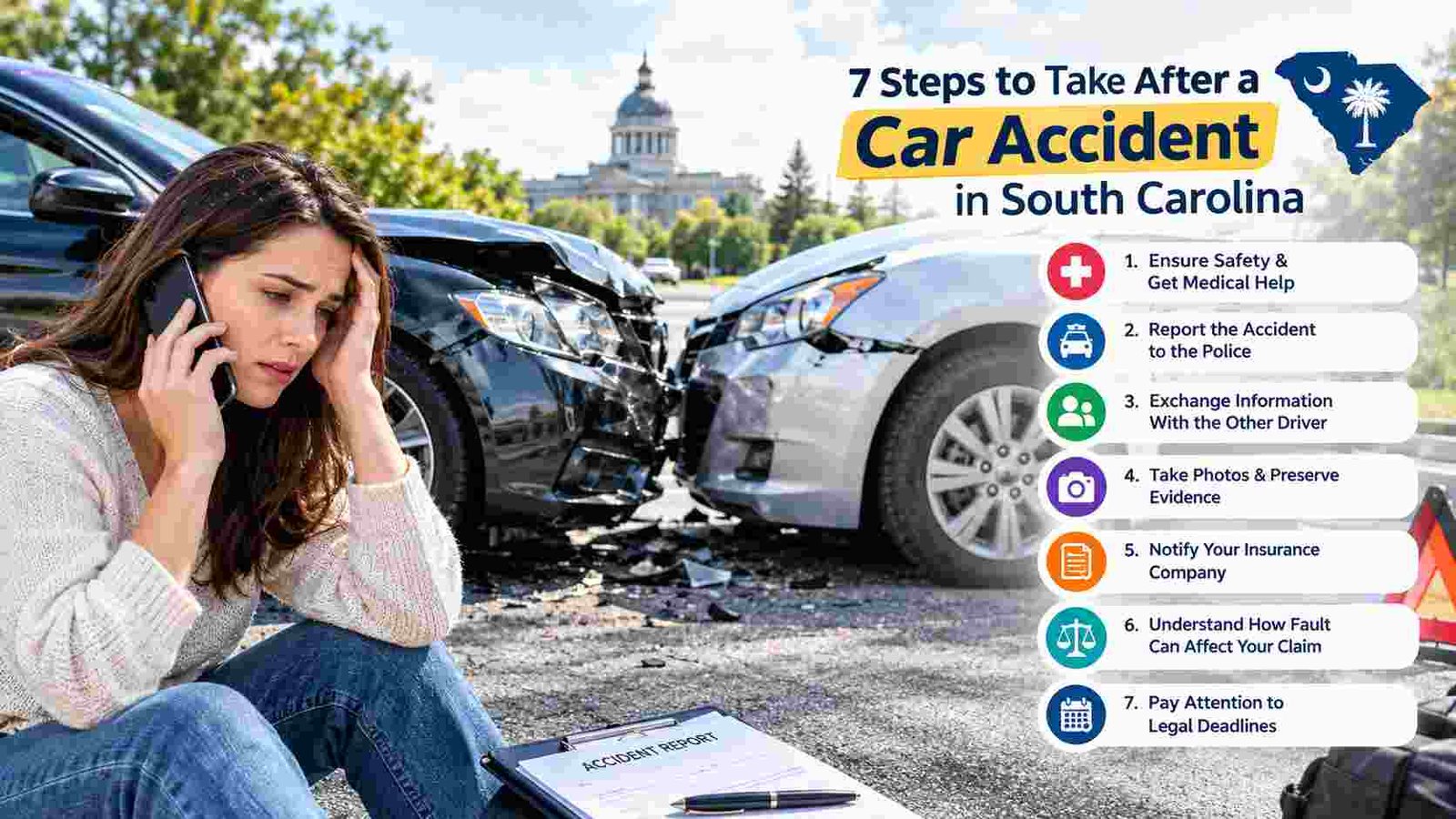
If you are involved in a car accident in South Carolina, knowing the right steps can help you protect your health, keep important records, and understand your options. Taking action early can also make it easier to deal with insurance companies and other parties involved. Here are seven important steps to consider after a car accident in South Carolina.
1. Check for Injuries and Move to Safety
Your safety should always come first after a car accident. Check yourself and your passengers for injuries. If someone appears seriously injured, avoid moving them unless there is an immediate danger, such as fire or another collision. Call 911 if anyone needs emergency medical assistance or if the situation creates a serious safety risk. If your vehicle can be moved safely, move it away from traffic when appropriate. Turn on your hazard lights to warn other drivers.
Do not assume that everyone is fine simply because there is no visible injury. Some problems, including neck injuries and concussions, may not show obvious symptoms immediately. Getting medical attention as soon as possible is a sensible step, even if you initially feel normal. Medical records can also help document any injuries connected to the accident.
2. Report the Accident to the Police
Contact law enforcement when required or when the accident involves injuries, significant damage, or other circumstances that call for an official response. South Carolina has specific requirements for reporting traffic accidents. Drivers should follow the instructions of law enforcement and comply with applicable state reporting rules. When officers arrive, provide accurate information about what happened. Explain what you observed without guessing about details you do not know. Avoid accepting blame or making assumptions about the other driver’s actions before the facts are clear.
If an officer prepares an accident report, ask how you can obtain a copy. The report may contain useful information about the people involved, the location, and the officer’s observations. Keep in mind that an accident report is only one source of information. Other evidence, including photographs, witness statements, and medical records, may also be important when questions about responsibility arise.
3. Exchange Information With the Other Driver
If it is safe to do so, exchange basic information with the other driver. This can help you and your insurance company identify the people and vehicles involved. Try to collect the following details:
- Full names and contact information of the drivers.
- Driver’s license information.
- Vehicle registration details.
- Insurance company names and policy information.
- Vehicle makes, models, colors, and license plate numbers.
- Names and contact details of any available witnesses.
Remain calm and polite during the conversation. Avoid arguing about who caused the accident at the scene. Do not feel pressured to make promises about payment or agree to a settlement before you understand the situation. If the other driver refuses to provide information or leaves the scene, inform the police and follow their instructions.
4. Take Photos and Preserve Important Evidence
Photographs and written notes can help you remember what happened and document the condition of the vehicles. If it is safe, take pictures of the damage to all vehicles involved. Capture the wider accident scene, road signs, traffic signals, skid marks, debris, and any visible injuries. Photographs from different angles may provide a clearer picture of the incident.
You should also write down the date, time, location, weather conditions, and a brief description of the accident while the details are fresh in your memory. Keep copies of documents connected to the incident, including:
- Medical bills and appointment records.
- Vehicle repair estimates and invoices.
- Insurance correspondence.
- Receipts for accident-related expenses.
- Records of missed work or lost income.
- Copies of the police report and witness details.
If your vehicle has a dashboard camera, preserve the relevant footage. Security cameras or nearby businesses may also have recordings, although footage may not be kept for long. Organizing this information in one folder can make it easier to respond to questions from insurers, repair shops, medical providers, or a legal professional.
5. Notify Your Insurance Company
Contact your insurance company promptly and explain that you have been involved in an accident. Review your policy to understand the reporting process and any applicable deadlines. Provide truthful information and keep a record of your communications. Your insurer may request photographs, a police report, repair estimates, or other documents before evaluating the claim. Before accepting a settlement, make sure you understand what it covers. A payment for vehicle damage may be different from a settlement involving medical expenses or other losses.
If an insurance adjuster asks you to sign documents or provide a recorded statement, take time to understand the request and its possible implications. You can ask questions or seek independent legal guidance if you are unsure. Avoid exaggerating your losses, but do not overlook genuine expenses. Keeping accurate records can help you explain the financial impact of the accident.
6. Understand How Fault Can Affect a Car Accident Claim
Determining responsibility is an important part of many car accident claims. The circumstances may include speeding, distracted driving, unsafe lane changes, failure to yield, or other actions that contributed to the collision.
South Carolina generally follows a modified comparative negligence rule. Depending on the facts, a person’s recovery may be reduced according to their share of fault. Under the state’s general rule, a person who is more than 50% at fault cannot recover damages from another party. The application of this rule depends on the evidence and the specific legal issues involved. Statements made at the scene do not necessarily settle the question of fault, and an insurance company’s initial assessment may not be the final word. If the accident caused serious injuries, substantial financial losses, or a dispute about responsibility, getting legal information may help you understand the available options.
For example, people seeking information about injury claims in the state can visit Solomon Law SC, which provides information about car accident legal services in South Carolina. Learning about the claims process can help you prepare questions, organize your records, and make more informed decisions about the next steps.
7. Pay Attention to Legal Deadlines
Time limits can affect your ability to bring a legal claim after a car accident. These deadlines depend on the type of claim, the parties involved, and the circumstances of the incident. In South Carolina, many personal injury claims are subject to a three-year statute of limitations, but exceptions and different rules may apply. Claims involving government entities or other special circumstances can have different requirements.
Do not assume that you have plenty of time simply because the accident happened recently. Waiting too long can make it harder to obtain evidence, locate witnesses, and document injuries. If you believe another person may be legally responsible for your injuries or losses, consider seeking advice from a qualified South Carolina attorney. A legal professional can review the facts and explain which deadlines may apply to your situation.
Common Mistakes to Avoid After a Car Accident
Even when people take the right steps at the scene, certain mistakes can create additional problems later.
Ignoring medical symptoms: Do not dismiss pain, dizziness, headaches, or other symptoms that appear after the accident. Seek appropriate medical attention.
Failing to keep records: Missing bills, photographs, or correspondence can make it more difficult to explain what happened and how the accident affected you.
Posting accident details online: Public posts may be misunderstood or taken out of context. Be careful about sharing details of an ongoing claim on social media.
Accepting an offer without understanding it: Before agreeing to a settlement, review its terms and understand which claims or expenses it covers.
Missing important deadlines: Keep track of insurance reporting requirements and any applicable legal time limits.
Guessing about the cause: Give accurate information and let the evidence help establish what happened.
Avoiding these mistakes can help you stay organized while dealing with the practical challenges that often follow a collision.
What Compensation May Be Available After a Car Accident?
Depending on the facts and applicable law, an injured person may be able to seek compensation for certain accident-related losses. Potential damages may include reasonable medical expenses, lost wages, reduced earning capacity, vehicle damage, and pain and suffering. The availability and value of any recovery depend on the evidence, the nature of the injuries, the applicable legal rules, and any responsibility assigned to the injured person.
Not every accident leads to a successful compensation claim. Insurance coverage, disputed facts, and legal requirements can all affect the outcome. Keep records of your expenses and the ways the accident has affected your daily activities. If you have questions about possible compensation, a qualified attorney can review your circumstances and explain your options.
Conclusion
A car accident can create unexpected challenges, but taking organized steps afterward can make the situation easier to manage. Prioritize safety, seek medical attention, report the accident when required, exchange information, and preserve important evidence. You should also communicate carefully with insurance companies, understand how fault may affect a claim, and pay attention to applicable deadlines. If injuries are serious or responsibility is disputed, consider getting professional legal guidance. Every accident is different, so focus on your health, keep accurate records, and make decisions based on reliable information. These practical steps can help you navigate the aftermath of a car accident in South Carolina with greater confidence.
Disclaimer: This article provides general educational information and is not a substitute for legal advice. Laws and deadlines can vary depending on the circumstances. Consult a qualified attorney about your specific situation.
 Blitz
 Wild Rise